
When it comes to protecting your property’s most vulnerable entry points-its windows-the options can feel overwhelming. You know you need to reinforce your glass, but do you need a film designed to handle accidental impacts from a stray baseball, or one engineered to withstand a determined intruder? Terms like ‘mil thickness’ and ‘attachment systems’ only add to the confusion, leaving many Dallas-Fort Worth property owners worried about making the wrong choice for their specific needs.
Navigating the world of safety and security window film doesn’t have to be a source of stress. In this guide, we cut through the jargon to provide clear, expert answers. We’ll break down the crucial differences in thickness, strength, and application between safety and security films. By the end, you’ll understand exactly which solution is right for your home or business, giving you the confidence and peace of mind that comes with protecting your family, employees, and assets effectively.
Key Takeaways
- Understand the fundamental difference: safety film is designed for accidental impact, while security film is engineered to delay and deter forced entry.
- Learn how key variables like film thickness, adhesive strength, and anchoring systems determine the right level of protection for your property.
- While all safety and security window film holds shattered glass together, its resilience against an intentional attack is what truly sets it apart.
- Discover why professional installation is non-negotiable for achieving true security and ensuring your window film performs as intended.
What is the Core Purpose of Safety and Security Window Film?
At their core, both safety and security films are designed to solve a dangerous problem: the inherent vulnerability of glass. When glass shatters, it creates immediate and significant hazards. The primary purpose of any safety and security window film is to hold those dangerous shards together upon impact. Constructed from thick, heavy-duty layers of polyester bonded by strong adhesives, these films are applied directly to the interior surface of your existing glass.
This application transforms your most vulnerable entry points into a source of strength and resilience. While they share this foundational benefit, their specific designs diverge based on the type of threat they are meant to counter. Think of it as the difference between preparing for an unfortunate accident and fortifying against a deliberate attack. Understanding this distinction is key to choosing the right protection for your home or business.
Shared Benefits: The Common Ground
While their primary applications differ, both film types provide a suite of valuable protections for your property and its occupants. Every professional-grade installation offers these core advantages:
- Hazard Mitigation: Both films drastically reduce the risk of injury from flying or falling glass fragments, whether from a storm or an accidental impact.
- UV Protection: They block up to 99% of harmful ultraviolet rays, protecting your furniture, flooring, and artwork from fading while also safeguarding your skin.
- Optical Clarity: High-quality films are virtually invisible, ensuring you can enjoy your view and natural light without distortion or darkening.
The Key Distinction: Intent of Impact
The fundamental difference between these two products lies in the intent of the impact they are engineered to withstand. This is the most critical factor in determining which solution meets your needs.
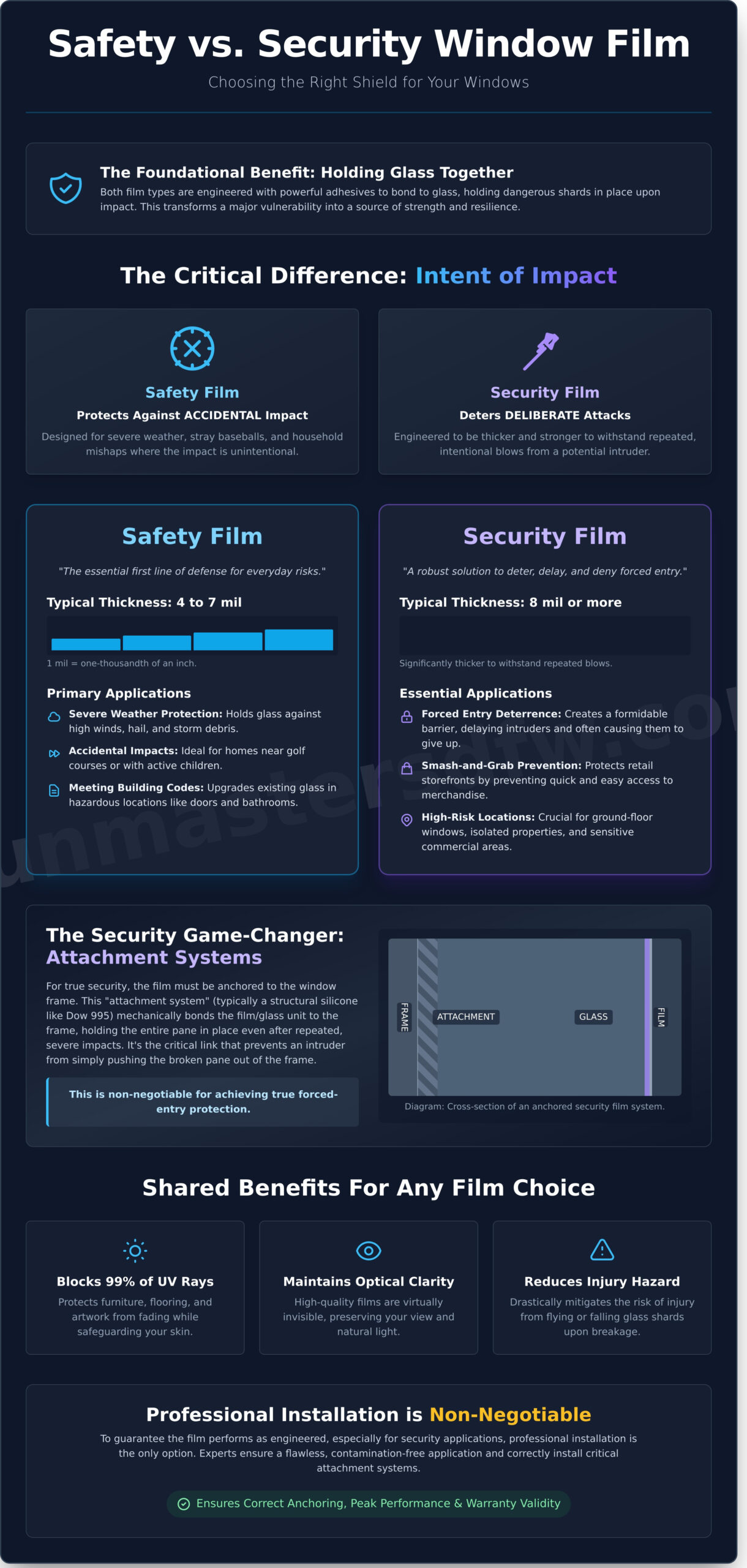
Safety film is primarily designed to protect people and property from accidental glass breakage. This includes impacts from severe weather events like high winds and hail, stray golf balls, or household accidents. In contrast, security film is a more robust solution engineered to deter and delay forced entry. It is significantly thicker and stronger, designed to withstand repeated, deliberate blows from a potential intruder. This critical distinction directly influences the thickness of the film, its tensile strength, and the anchoring system used during a professional installation to provide true peace of mind.
A Closer Look at Safety Window Film
Think of safety window film as the essential first line of defense for your glass. Standard annealed glass, found in most homes and commercial buildings, can be a significant hazard when it breaks, shattering into long, dangerous daggers. The primary purpose of safety film is to solve this problem. Using a powerful adhesive, it bonds tightly to the glass, holding the hazardous shards together in the frame upon impact. This simple yet highly effective technology brings your existing windows up to modern safety code standards, drastically mitigating the risk of injury from accidental breakage.
This product is the foundational “safety” component in the broader category of safety and security window film, offering an invaluable solution for everyday risks.
Primary Applications and Use Cases
The value of safety film shines in common, real-world situations where glass is most vulnerable. It provides a pragmatic and cost-effective upgrade for protecting people and property. Common applications include:
- Protection Against Severe Weather: It creates a strong barrier against high winds, hail, and storm debris, helping to keep the building envelope intact and preventing further interior damage.
- Safeguarding Against Accidental Impacts: An ideal solution for homes with active children or properties near golf courses, it protects against stray baseballs, rocks flung from lawnmowers, and other sudden impacts.
- Meeting Building Safety Codes: Many local codes require safety glazing in high-traffic or potentially hazardous areas. Safety film is an efficient way to upgrade glass in doors, sidelites, and bathroom enclosures to be code-compliant.
- Ideal for Vulnerable Locations: It’s perfectly suited for ground-floor residential windows and commercial retail storefronts where the risk of accidental breakage is highest.
Typical Thickness and Strength
Safety films typically range from 4 to 7 mil in thickness (a “mil” is a unit of measurement equal to one-thousandth of an inch). This thickness is expertly engineered to absorb and disperse the energy from a single, sharp impact, successfully containing the glass within its frame. While this makes the window significantly harder to break, it’s crucial to understand its limitations.
A 4-mil film provides a basic level of deterrence for a smash-and-grab attempt by creating a noisy and time-consuming obstacle that may encourage a thief to move on. However, it is not designed to withstand a determined, prolonged assault from a motivated intruder. For high-risk environments, much thicker security films are required to meet benchmarks like the official GSA and DoD security standards for forced entry and blast mitigation. In essence, safety film is about protecting people from accidents, not stopping a dedicated criminal attack.
Understanding High-Level Security Window Film
When your property requires more than just protection from accidental glass breakage, high-level security window film provides a robust and resilient solution. This is not merely a stronger version of safety film; it is a significant upgrade in strength, engineered to withstand prolonged and intentional attacks. By transforming your most vulnerable entry points-your windows-into a formidable barrier, this film offers the ultimate peace of mind for high-risk environments.
Engineered for Intrusion and Blast Mitigation
The primary purpose of security film is to delay or deny entry to determined intruders. During a break-in, riot, or act of vandalism, this film holds shattered glass firmly in place, making it incredibly difficult for an attacker to create an opening. This delay provides crucial time for occupants to find safety and for law enforcement to arrive. Furthermore, this is the same category of safety and security window film used in high-risk locations like government buildings, airports, and jewelry stores to provide protection against bomb blasts and seismic events by mitigating the danger of flying glass shards.
Film Thickness and Advanced Adhesives
The resilience of security film comes from two key components: its thickness and its adhesive. While safety films are typically 4 to 7 mil thick, security films range from 8 to 21 mil or more. This substantial increase in polyester layers is paired with a much more aggressive, pressure-sensitive adhesive that creates a powerful bond with the glass. This combination is designed to absorb and disperse the energy from repeated impacts, whether from a sledgehammer, a brick, or a blast wave, keeping the window pane intact.
The Critical Role of Attachment Systems
A security film installation is only as strong as its weakest link, and that is often the window frame itself. To create a truly secure system, the film must be anchored to the frame using a professional attachment system. This prevents an intruder from simply pushing the entire sheet of compromised glass out of its frame. Without an attachment system, even the thickest security film performs more like a basic safety film.
There are two primary professional methods for anchoring the film:
- Wet Glaze Systems: A structural silicone, like Dow 995, is used to bond the film-and-glass unit directly to the window frame, creating a strong yet flexible seal.
- Mechanical Systems: A metal battening system is physically attached to the window frame over the film, clamping it securely in place. This is often used for the highest-level security applications.
The experts at Sun Masters Window Tinting can recommend the right system to ensure your security film performs exactly as intended when you need it most.
Head-to-Head Comparison: Safety Film vs. Security Film
Choosing the right safety and security window film comes down to understanding your specific vulnerabilities and goals. While both films strengthen glass, their design, durability, and applications are fundamentally different. This direct comparison breaks down the four key factors-thickness, application, anchoring, and cost-to help you make a confident, informed decision for your property’s protection.
| Feature | Safety Window Film | Security Window Film |
|---|---|---|
| Thickness | 4-7 mil | 8-21+ mil |
| Primary Use | Accident protection, storm debris, minor smash-and-grab | Forced entry deterrence, bomb blast mitigation, riot protection |
| Anchoring System | Typically not required | Often requires an attachment system to bond the film to the frame |
| Relative Cost | Lower | Higher |
Thickness and Durability
The most significant difference lies in the film’s thickness, measured in ‘mils’ (one-thousandth of an inch). Safety film, at 4-7 mils, is engineered to hold glass shards together during a single-impact event, like an errant golf ball or storm debris, preventing dangerous flying glass. Security film starts at 8 mils and can exceed 21 mils, providing a much tougher, multi-layered barrier designed to withstand a sustained, deliberate assault from an intruder using tools like a bat or hammer.
Primary Use Case and Threat Level
Matching the film to the threat is critical for achieving true peace of mind. Safety film is an excellent, proactive solution for mitigating everyday hazards in homes, schools, and retail storefronts. For commercial properties, government buildings, or homeowners concerned with high-level threats like forced entry or extreme weather, only a true security film provides the robust protection needed to delay intruders, giving occupants time to react and law enforcement time to arrive. The right film directly addresses your property’s unique risks.
Installation and Cost
Naturally, the thicker, more resilient security film comes at a higher price point. The cost difference isn’t just in the material; it’s in the specialized installation process. To achieve maximum effectiveness, security films are often installed with an attachment or anchoring system that mechanically fastens the film to the window frame. This creates a powerful, unified barrier that resists being pushed out of the frame, a common failure point for unanchored films. Because every installation is unique, the best way to understand the investment is to get an expert assessment. Get a precise quote for your DFW property.
Why Professional Installation is Non-Negotiable for Security
When investing in protection for your property, it’s crucial to understand a critical fact: the performance of security film is 90% dependent on the quality of its installation. The film itself is only one component of a complete system. Without expert application and anchoring, even the strongest film will fail to provide the delay and deterrence you need during a break-in attempt or severe weather event.
Improper application inevitably leads to bubbles, peeling edges, and a compromised bond with the glass. This not only looks unprofessional but severely undermines the film’s ability to hold shattered glass together. A professional installer ensures a flawless, edge-to-edge application and, most importantly, secures the film to the window frame itself.
The Dangers of DIY Security Film
While DIY kits from hardware stores or online retailers may seem like a cost-effective solution, they cannot provide true security. Attempting a DIY installation for a critical safety feature often creates more risk than it solves, giving you a false sense of security. The primary shortcomings include:
- Inferior Materials: DIY kits do not offer the professional-grade thicknesses and adhesive strength required to withstand significant force.
- Improper Technique: Without specialized tools and training, achieving a seamless, durable bond to the glass is nearly impossible.
- No Attachment System: This is the most critical failure. DIY solutions do not include the wet-glaze anchoring systems that bond the film-and-glass unit to the window frame, which is essential for preventing intruders from pushing the entire pane in.
The Sun Masters Process: Expertise You Can Trust
Choosing a professional installer is the only way to guarantee your safety and security window film will perform as designed. At Sun Masters, our process is built on decades of expertise. We begin with a thorough consultation to assess your property’s unique vulnerabilities and recommend the right solution for your needs. Our certified technicians are masters of advanced installation techniques, using only industry-leading films and proven attachment systems to create a truly formidable barrier.
With 35+ years of experience and thousands of local installations, we don’t just apply a product; we engineer a complete security solution. Trust Sun Masters to deliver a flawless, effective installation that provides genuine protection and lasting peace of mind.
Secure Your Property with the Right Layer of Protection
While both safety and security films protect against broken glass, their core purposes are distinct. Safety film is your first line of defense against accidental impacts and severe weather, holding dangerous shards together. High-level security film, however, is a much thicker solution engineered to actively delay and deter forced entry, providing critical time when it matters most. Making the right choice depends entirely on your specific security goals.
Ultimately, the effectiveness of any safety and security window film hinges on flawless professional installation. With over 35 years of experience serving the DFW Metroplex, the certified experts at Sun Masters have completed thousands of successful residential and commercial installations. We have the proven expertise to assess your unique vulnerabilities and recommend the ideal film solution from industry-leading brands to deliver true peace of mind.
Ready to reinforce your most vulnerable entry points? Request a free, no-obligation consultation to secure your property. Let our seasoned team help you choose the perfect film to protect what matters most.
Frequently Asked Questions About Safety and Security Window Film
Can you combine safety and security film with solar control film?
Absolutely. Many modern window films are engineered to provide multiple benefits in a single product. You can get a film that offers robust security features while also blocking UV rays, reducing heat, and cutting down on glare. This multi-purpose solution allows you to enhance the safety of your property, improve comfort, and lower your energy bills simultaneously. Our experts can help you select a combination film that meets all your specific needs, providing a comprehensive solution.
Is security window film noticeable on the glass?
High-quality security window film is designed to be optically clear and virtually undetectable once professionally installed. It won’t alter the appearance of your windows or obstruct your view, maintaining the aesthetic integrity of your home or commercial building. While some combination films may have a slight tint for solar control, the primary security layer itself is invisible. You gain a powerful layer of protection without compromising the look you love, offering true peace of mind.
How much does professionally installed safety and security film cost in Dallas?
In the Dallas-Fort Worth area, the cost for professionally installed safety and security window film typically ranges from $9 to $25 per square foot. The final price depends on several factors, including the thickness of the film, the complexity of the installation, and whether you choose a combination film with added solar control features. To provide an accurate and transparent price for your project, we offer a free, no-obligation consultation and quote to assess your needs.
Is security window film bulletproof or bullet-resistant?
This is a common and important question. Standard security window film is not rated as bulletproof or bullet-resistant. While it significantly strengthens the glass, its primary purpose is to deter forced entry by making the glass harder to breach and to reduce hazards from flying shards during severe weather. It is designed to delay intruders, not stop bullets. For ballistic protection, specialized glass and framing systems are required, which is a different category of product.
How long does professionally installed window film last?
When installed by experienced professionals, you can expect high-quality window film to last for many years. Most residential installations come with a lifetime manufacturer’s warranty against issues like cracking, peeling, or demetallizing, while commercial installations typically carry a 10 to 15-year warranty. This long-term durability ensures your investment continues to provide protection, comfort, and energy savings for decades, backed by our commitment to quality installation and superior products.
Can security film be installed on any type of window or glass door?
Security film can be applied to most types of flat glass, including single-pane, double-pane, and tempered glass found in windows, sliding glass doors, and storefronts. However, it is generally not recommended for installation on textured, frosted, or wired glass. Our expert technicians will assess your specific windows and glass doors during your consultation to confirm compatibility and recommend the right product to ensure a secure and effective installation for your property.